How to Help Your Child Learn to Read at Home (Ages 2–7)
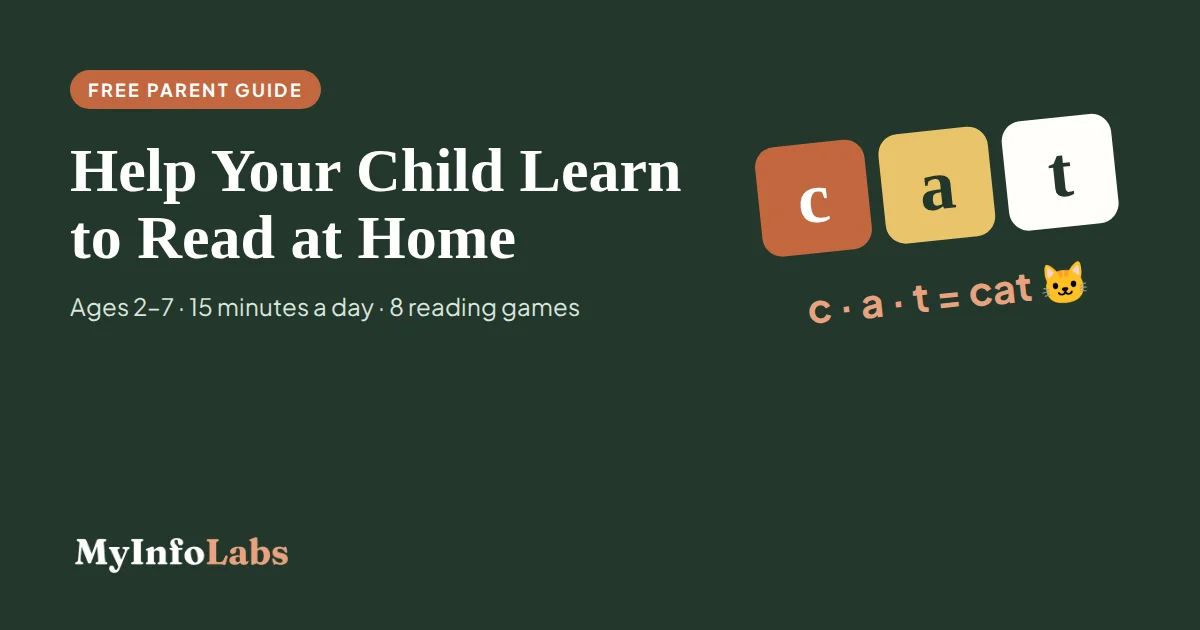
Reading starts long before school. Children build reading skills step by step: hearing the sounds in words, knowing letters, linking letters to sounds, and then blending those sounds into words. You can help with every step through short, playful moments together, and 15 minutes a day is enough.
Key takeaways
- Read aloud every day. Even 10 minutes builds vocabulary and a love of books.
- Teach the sounds letters make (“mmm” for M), not just their names.
- Keep sessions short and fun, and stop while your child still wants more.
- Every child is ready at a different time. Praise effort and follow their pace.
In this guide
1. The 5 stages of early reading
| Stage | What it looks like | How you can help |
|---|---|---|
| Listening | Enjoys stories, songs and rhymes | Read aloud and sing every day |
| Sound play | Notices rhymes and first sounds in words | Rhyming and “I spy” games |
| Letters | Recognises letters and their sounds | Letter-sound games, magnetic letters |
| Blending | Joins sounds: c-a-t makes “cat” | Sound out short words together |
| Early reading | Reads simple words and short books | Easy readers and sight words |
2. Five habits that matter most
- Read aloud daily. Even 10 minutes builds vocabulary and a love of books.
- Keep it short and fun. Stop while your child still wants more.
- Talk a lot. Describe things, ask questions and listen to their answers.
- Praise effort. “You worked hard sounding that out!”
- Follow their pace. Every child is ready at a different time.
Read-aloud tips that build readers
- Run your finger under the words as you read.
- Use different voices for the characters.
- Pause and ask, “What do you think happens next?”
- Let your child turn the pages, and talk about the pictures together.
- Re-read favourites. Repetition helps.
3. Letter sounds and blending
Teaching the sounds letters make, called phonics, is one of the most effective ways to help children learn to read. Focus on the sound, like “mmm” for M, rather than the letter’s name.
A common order for first sounds
Get the free printable reading guide
The sound order, sight word list, all 8 games, the daily routine and a 4-week tracker on 7 printable pages. No email needed.
Download the free PDF →4. Eight fun reading games
Games turn practice into play. Pick one or two a day and keep each to about 5 minutes.
1. I spy sounds
“I spy something that starts with ‘b’…” (ball, book, banana).
2. Rhyme time
Say a word and take turns finding rhymes, even silly made-up ones.
3. Letter hunt
Find a chosen letter on cereal boxes, signs and book covers.
4. Magnet words
Build short words with fridge letters, then change one letter to make a new word.
5. Treasure notes
Hide simple notes like “look in the box” that lead to a small surprise.
6. Word hop
Write sight words on paper on the floor. Call one out and your child hops onto it.
7. Label the house
Stick labels on everyday objects: door, bed, chair, cup.
8. Your turn to read
Share reading: you read a page, your child reads a word, a line or a page.
5. A simple 15-minute daily routine
Short, regular practice works far better than long, occasional sessions. Choose a calm time, like after a snack or before bed.
| Minutes | What to do |
|---|---|
| 5 min | Read a favourite book aloud together, pointing to the words |
| 5 min | Sounds practice: 2–3 new letter sounds or a blending game |
| 3 min | Sight words: a quick game with 3–5 words |
| 2 min | Your child “reads” or retells part of the story, with lots of praise |
- Picture books with rhyme and repetition
- Books about things your child loves
- Simple “decodable” readers for practice
- Library visits where they choose
- Wait a few seconds before helping
- Ask, “What’s the first sound?”
- Look at the picture for clues
- Read it together, then move on
Keep it positive: if your child is tired or frustrated, stop and simply read to them. A happy connection with books matters more than finishing the lesson.
6. Your 4-week starter plan
Adjust to your child’s age and pace. It’s fine to repeat a week, and fine to move faster if they’re ready.
- Daily read-aloud
- Rhyme games
- “I spy” with first sounds
- Sounds s, a, t, p, i, n
- Blend words like sat, pin, tap
- Sounds m, d, g, o, c, k
- First 5 sight words
- Magnet words
- Word families: -at, -in, -op
- 5 more sight words
- Shared reading
Questions parents ask
What age should a child start learning to read?
Every child is ready at a different time. Listening, rhyming and sound games can start from about age 2, while letter sounds and blending often begin around ages 4–5. Follow your child’s interest and pace.
Should I teach letter names or letter sounds first?
For reading, the sounds matter most. Teach “mmm” for M and “sss” for S so your child can blend sounds into words. Letter names can come alongside.
How long should I practise reading with my child each day?
About 15 minutes is plenty for young children. Short, happy daily sessions work better than long, occasional ones.
What are sight words?
Common words like “the”, “said” and “was” that appear very often and are best learned to recognise on sight. Learning a few at a time through games helps.
What if my child gets frustrated?
Stop the lesson and simply read to them. Keep books fun. If reading stays very hard over time, talk to their teacher or doctor.
Want a structured phonics program?
This guide gives you a strong start. If you’d like step-by-step phonics lessons designed for parents to use at home, Children Learning Reading is a popular option with short daily lessons. Every child learns at their own pace, so results vary.
Sources
- Reading Rockets (PBS): Launching Young Readers, Sounds & Symbols
- Reading Rockets (PBS): Parent Tips for Kindergartners
Related
Disclosure: This post contains an affiliate link. If you buy through it, MyInfoLabs may earn a commission at no extra cost to you. Every child learns at their own pace; if you have concerns about your child’s speech, hearing or development, talk to their teacher or doctor. See our disclaimer.