Affiliate Marketing for Beginners: How It Works and a 30-Day Plan to Start
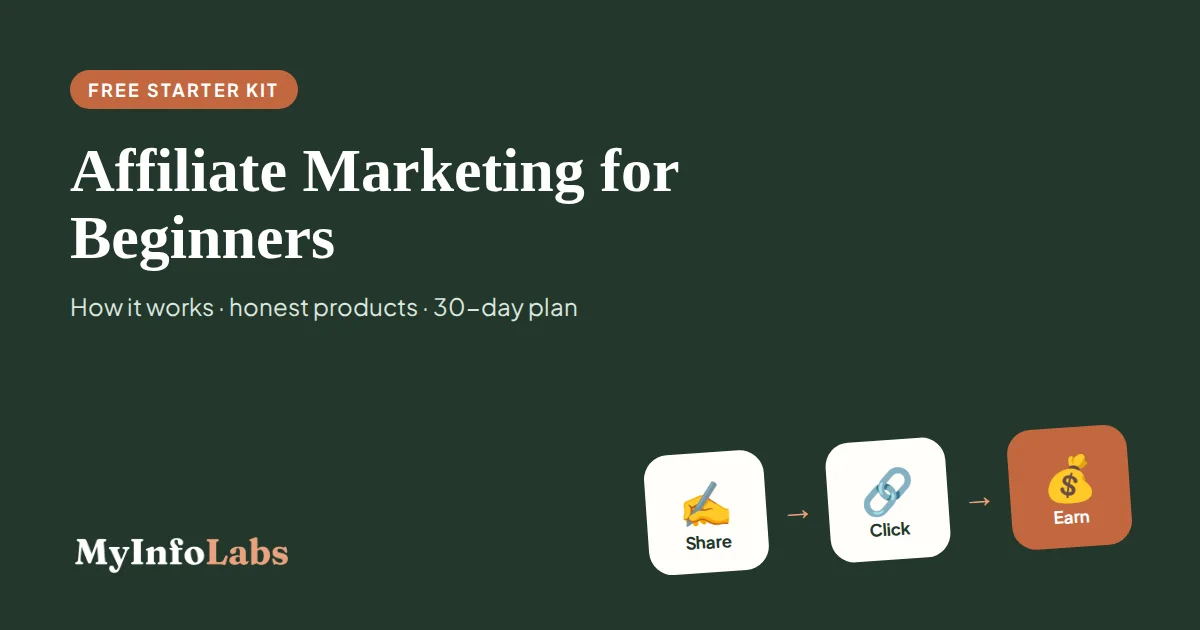
Affiliate marketing means recommending products you trust with a special tracking link, and earning a commission when someone buys. It’s low-cost to start and needs no stock, but it takes months of helpful content, not days. Here’s how it really works, how to pick a niche and honest products, and a simple 30-day plan to begin.
Key takeaways
- You share a tracking link; when a reader buys through it, the seller pays you a commission and the buyer pays the same price.
- Pick a focused niche you could happily create 50 pieces of content about.
- Only promote products you’d recommend to a friend. Your reputation is your biggest asset.
- Always disclose affiliate links clearly, close to the recommendation.
In this guide
1. How affiliate marketing works
Six words to know
| What’s good about it | The honest truth |
|---|---|
| Low cost to start | It usually takes months, not days |
| No products to create or ship | You need consistent, helpful content |
| Flexible hours, from anywhere | Most beginners earn little at first |
2. Choose a niche you can stick with
A focused niche makes everything easier: you know what to write about, who you’re writing for and which products fit. Your niche should pass all four of these tests:
- Interest: could I happily create 50 pieces of content about this?
- Problems: do people search for solutions, advice or reviews in this area?
- Products: are there quality products with affiliate programs?
- Focus: is it specific enough? “Indoor plants for beginners”, not just “home”.
| Broad area | Focused niche examples |
|---|---|
| Home | Small-space organising · power outage readiness · indoor plants |
| Hobbies | Beginner piano · home baking · fishing for beginners |
| Learning | Spanish for travel · online courses for seniors |
| Business | Tools for freelancers · email marketing for small shops |
| Pets | Training a new puppy · cat care for first-time owners |
3. Find honest products to promote
| Where to look | What you’ll find |
|---|---|
| Amazon Associates | Almost any physical product. Trusted by buyers, but commission rates are fairly low. |
| ClickBank | Digital products like courses and ebooks, often with higher commissions. Quality varies, so check carefully. |
| Awin, Impact, CJ | Large networks with well-known brands in many niches. |
| Direct programs | Many software tools run their own programs. Look for “Affiliates” or “Partners” in a site’s footer. |
10 red flags: skip the offer if you see…
Get the free printable starter kit
The niche worksheet, the product checklist, a review outline and the 30-day plan on 7 printable pages. No email needed.
Download the free PDF →4. Create content that helps first
People don’t click affiliate links because you posted them. They click because your content answered their question and the product is a natural next step.
| Content type | Example | Why it works |
|---|---|---|
| How-to guide | “How to start a vegetable garden on a balcony” | Builds trust and traffic |
| Product review | “[Product] review: who it’s for, pros and cons” | Reaches ready buyers |
| Comparison | “[Product A] vs [Product B]: which is better?” | Helps people decide |
| Best-of list | “7 best beginner keyboards under $200” | Popular in search |
| Free download | A checklist or guide with helpful links inside | Grows your email list |
An honest product review outline
- Quick verdict: who it’s for, and who should skip it.
- What it is: a plain description, the price and what’s included.
- Pros and cons: real ones, including the downsides.
- Alternatives: one or two other options and when they’re better.
- Your recommendation, with your affiliate link and a clear disclosure.
5. Get visitors: pick one source first
Doing one thing well beats doing five things poorly.
Paid ads are fast, but you can lose money quickly. Learn the free methods first, check each ad platform’s affiliate rules, and start with a small, fixed test budget.
6. Your 30-day starter plan
- Choose your niche
- Join 1–2 affiliate programs
- Set up a free website or blog
- Publish 2 helpful how-to articles
- Add a privacy policy and disclosure page
- Publish your first honest review or comparison
- Add an email sign-up form
- Share your content on one platform
- Plan next month’s 4 articles
Track four numbers each month: visitors to your site, clicks on affiliate links, email subscribers, and sales and commissions.
Questions beginners ask
Can I do affiliate marketing without a website?
Yes. Some people use YouTube, Pinterest or an email list. A simple website or blog is still useful, because you own it and search traffic can last for years.
How long does it take to earn from affiliate marketing?
It usually takes months, not days. Most beginners earn little at first while they build helpful content and traffic. No income is guaranteed.
Does affiliate marketing cost money to start?
It can start almost free: joining most affiliate programs is free, and you can begin with a free website, blog or social account.
Do I need to tell readers about affiliate links?
Yes. Add a clear disclosure close to your links. In the US the FTC requires it, and many other countries have similar rules.
Which affiliate programs are best for beginners?
The ones that fit your niche and that you’d recommend to a friend. Amazon Associates suits physical products; networks like ClickBank, Awin, Impact and CJ, or a tool’s own program, suit digital products and software.
Want to learn it step by step?
This guide gives you the map. If you’d like a structured course that walks you through each step in order, our sister site IncomeJets offers the free Affiliate Marketing Course, with short lessons you can follow at your own pace and no credit card needed.
Sources
Related
Please note: This guide is for general education only, and no income is promised or guaranteed. The free course is offered by IncomeJets.com, a sister site of MyInfoLabs; optional paid programs may be offered later and you’re never obliged to buy anything. See our disclaimer.